


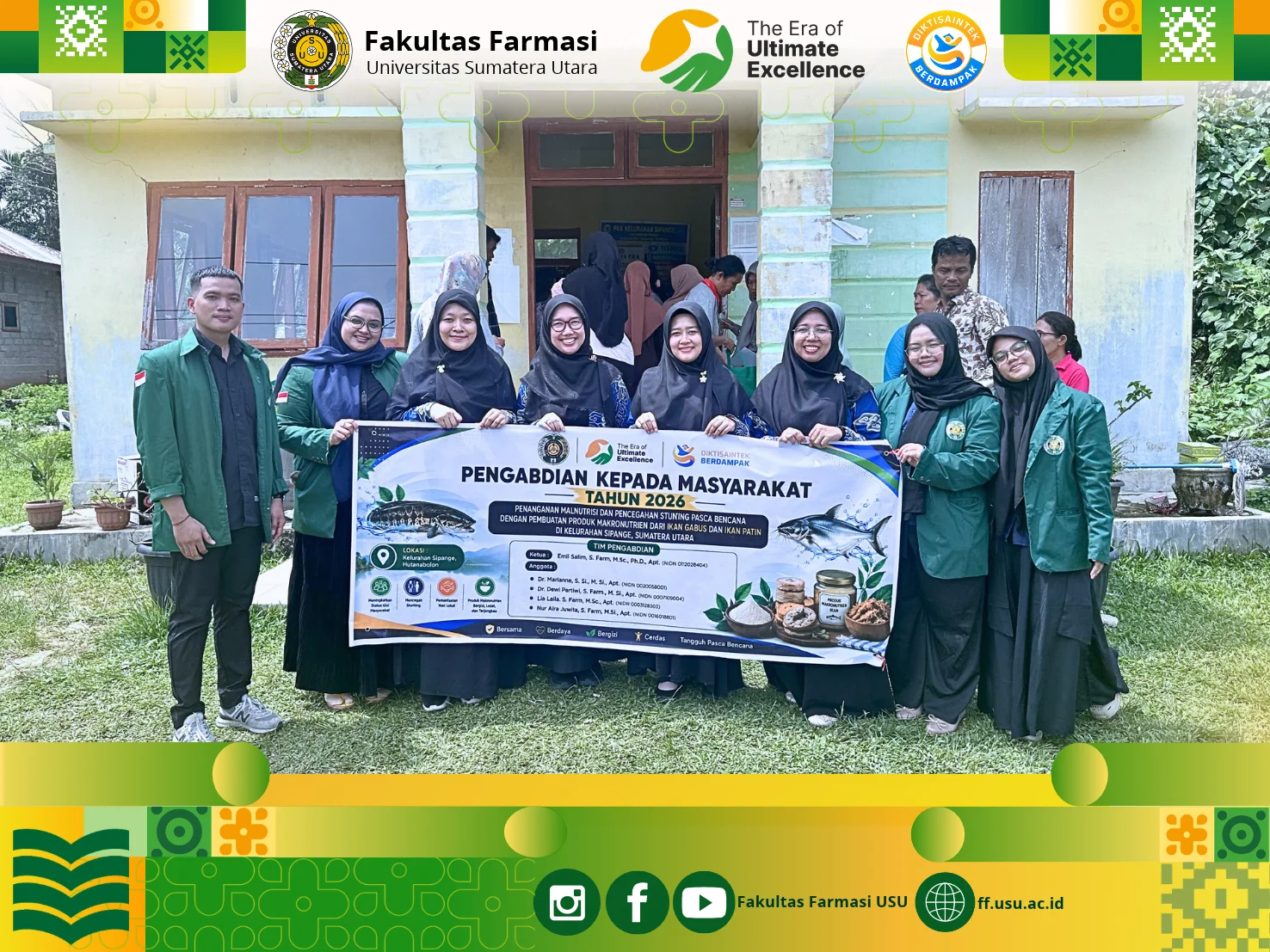
Medan, November 25, 2026 – The Faculty of Pharmacy, Universitas Sumatera Utara (USU) carried out a Community Service Program in Sipange Subdistrict, North Sumatra, on July 16, 2026. The activity carried the theme “Addressing Malnutrition and Preventing Post-Disaster Stunting through the Production of Macronutrient Products from Snakehead Fish and Pangasius Catfish in Sipange Subdistrict, North Sumatra.”
The activity was led by Emil Salim, S.Farm., M.Sc., Ph.D., Apt., together with a team consisting of Dr. Marianne, S.Si., M.Si., Apt.; Dr. Dewi Pertiwi, S.Farm., M.Si., Apt.; Lia Laila, S.Farm., M.Sc., Apt.; and apt. Nur Aira Juwita, S.Farm., M.Si.
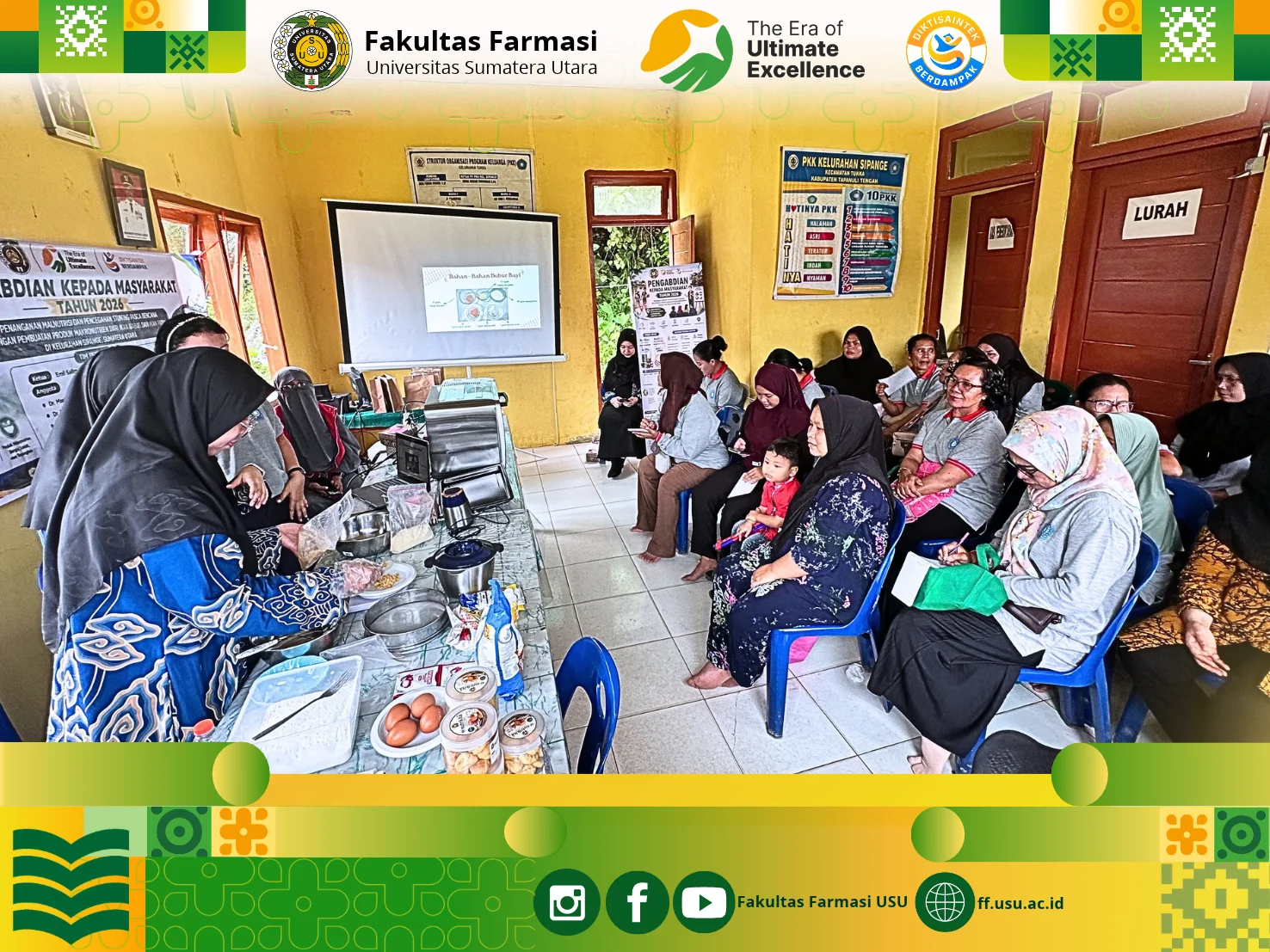
Through this activity, the Faculty of Pharmacy, USU team introduced the use of snakehead fish and pangasius catfish as raw materials for producing macronutrient products with the potential to support the fulfillment of community nutritional needs. This innovation is intended to help address malnutrition while supporting stunting prevention efforts, particularly among communities affected by disasters.
The utilization of local food resources is one approach that can be developed to increase the availability of nutritious food at the community level. In addition to introducing alternative nutritious products, this activity also represents the university's contribution to providing science-based solutions that can be applied to address public health issues.
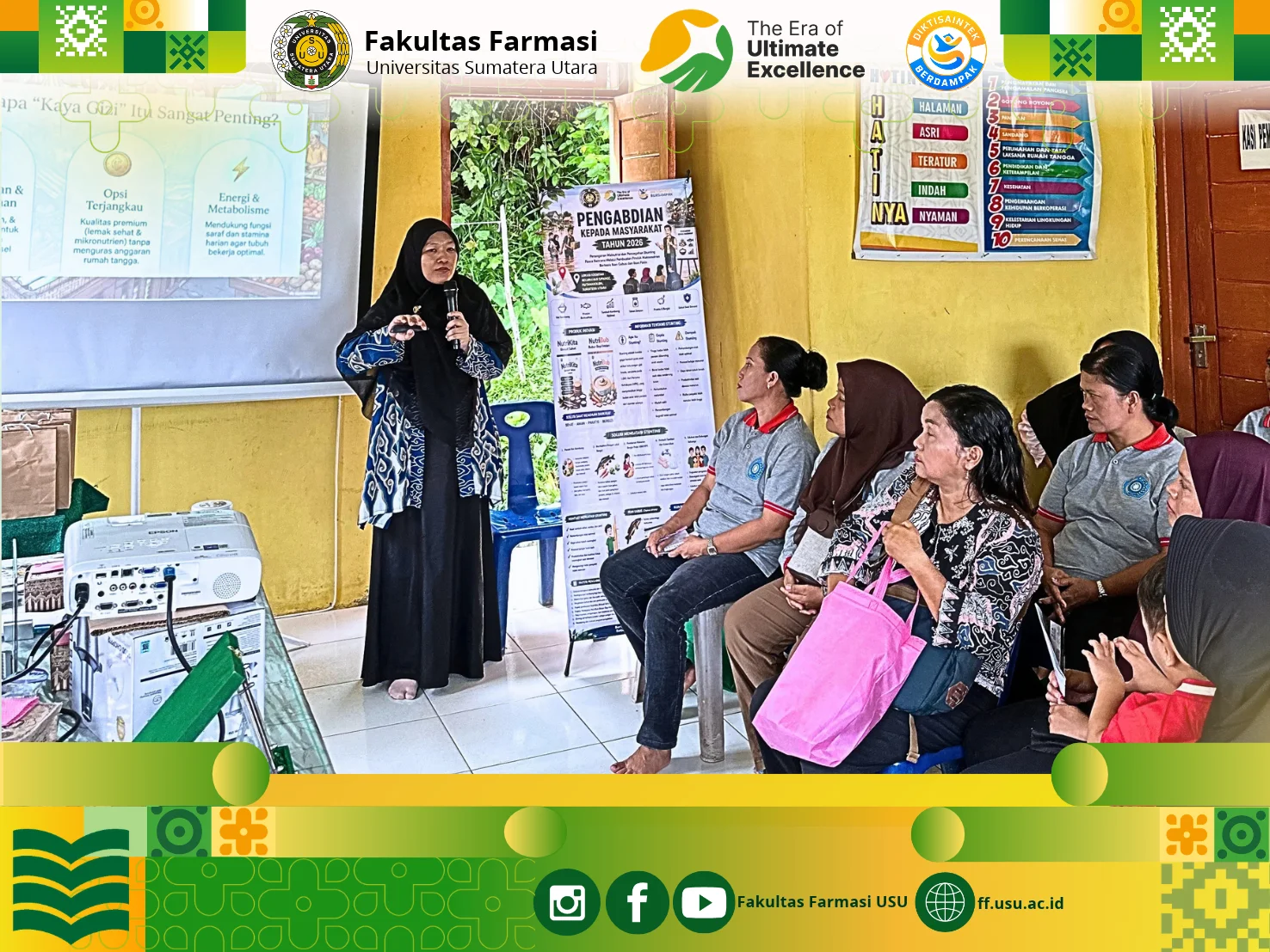
Through this community service program, the Faculty of Pharmacy, USU reaffirms its commitment to contributing to improvements in public health and nutritional resilience through the application of educational, research, and innovation outcomes. This activity is also in line with the achievement of the Sustainable Development Goals (SDGs), particularly SDG 2 – Zero Hunger, which supports food security and the fulfillment of community nutritional needs through the use of snakehead fish and pangasius catfish as raw materials for macronutrient products. This innovation serves as an alternative nutritious food source to help address malnutrition and prevent stunting, particularly among post-disaster communities.
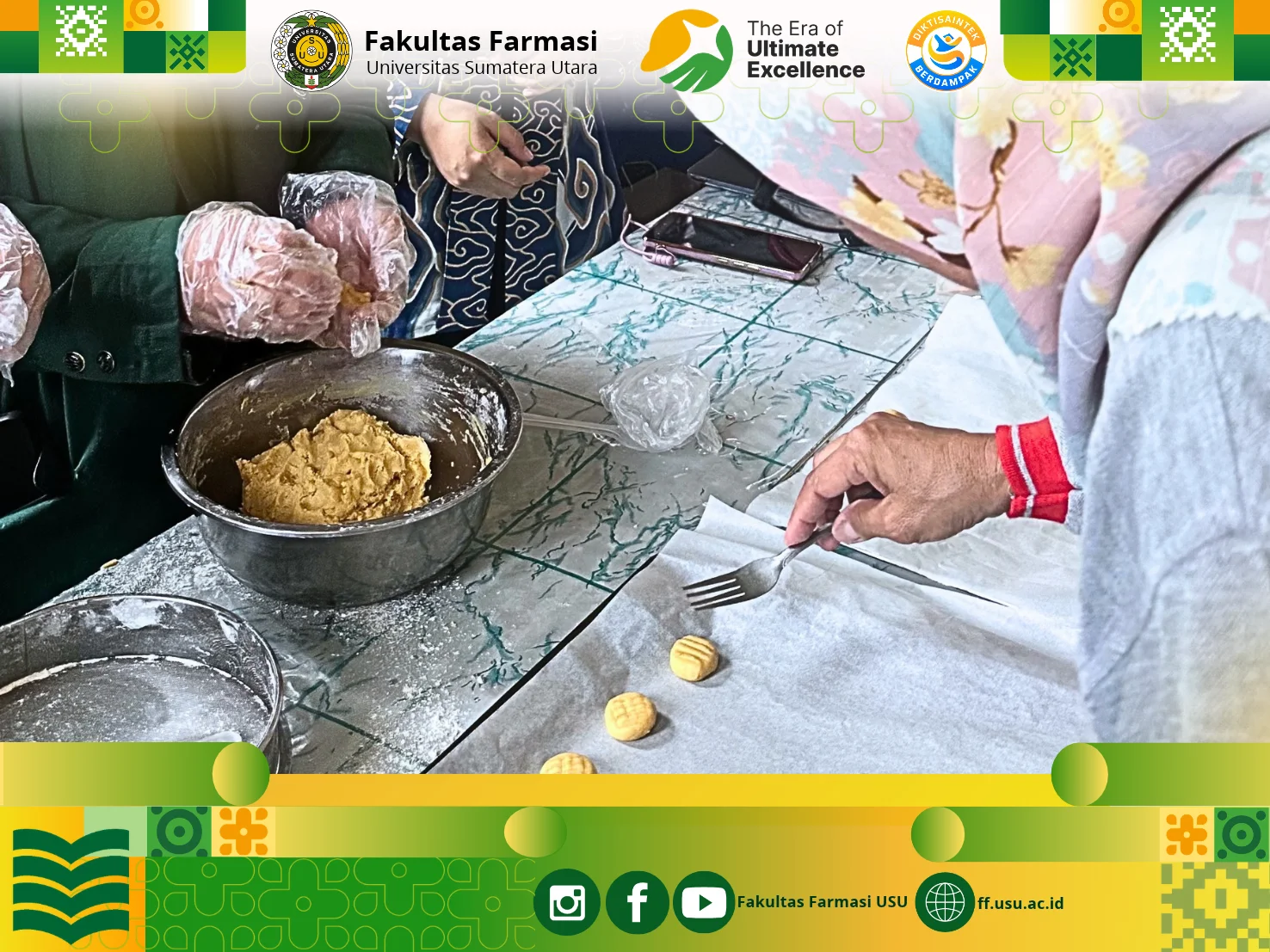
SDG 3 – Good Health and Well-Being contributes to increasing public awareness of the importance of fulfilling balanced nutritional needs and supporting efforts to prevent health problems caused by malnutrition, especially stunting among vulnerable groups.
SDG 8 – Decent Work and Economic Growth encourages the utilization of local fish resources to produce value-added products with the potential to create opportunities for community business development and increase the economic value of local fishery commodities.
SDG 17 – Partnerships for the Goals strengthens the role of higher education institutions in community empowerment through the application of science, technology, and innovation. This activity also promotes synergy between academics and the community in addressing post-disaster nutrition and health issues.
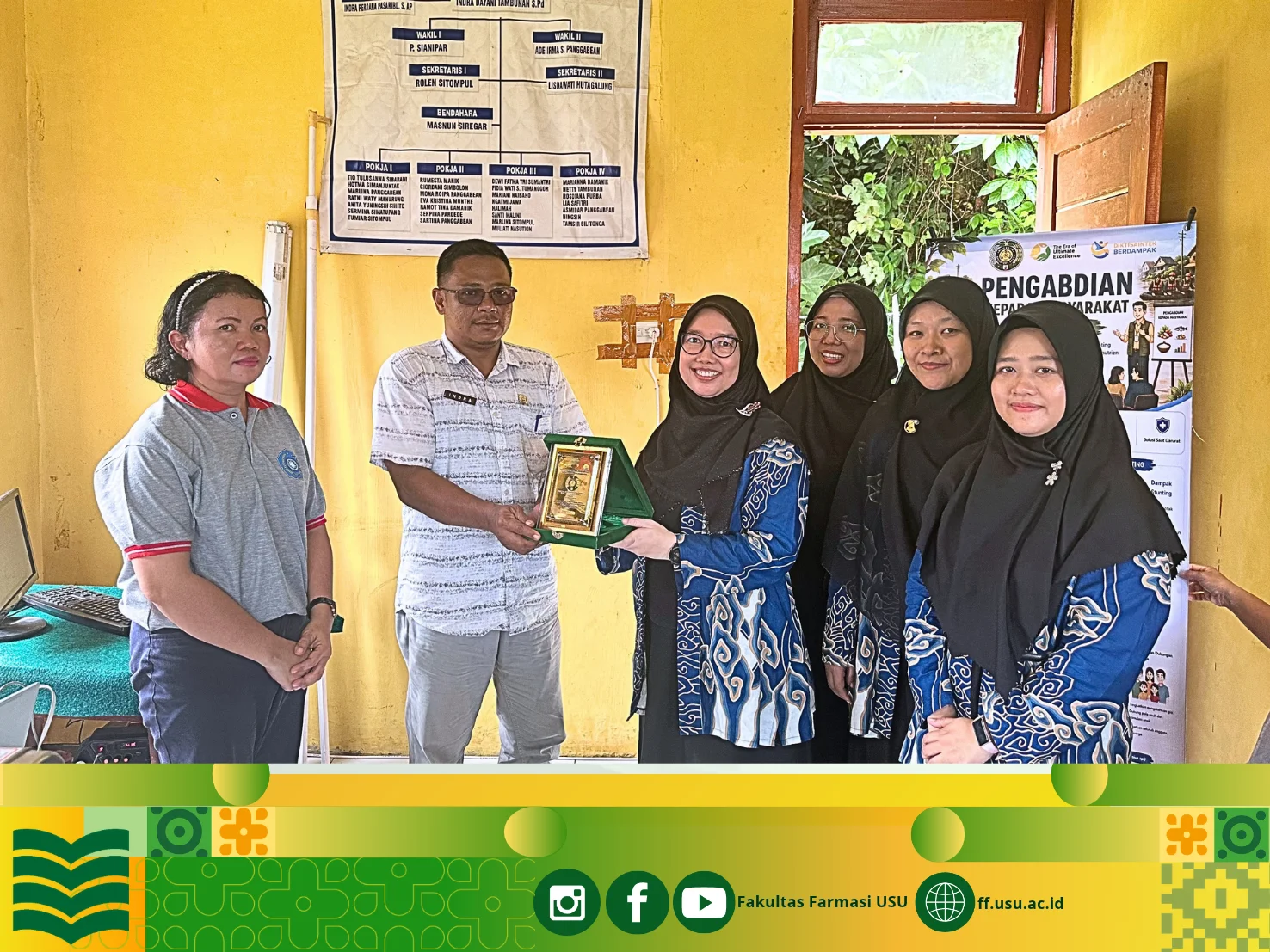
Through this activity, the Faculty of Pharmacy, USU not only introduces innovations in the utilization of local food resources but also strengthens the contribution of higher education institutions to supporting food security, improved health, and community economic empowerment.