


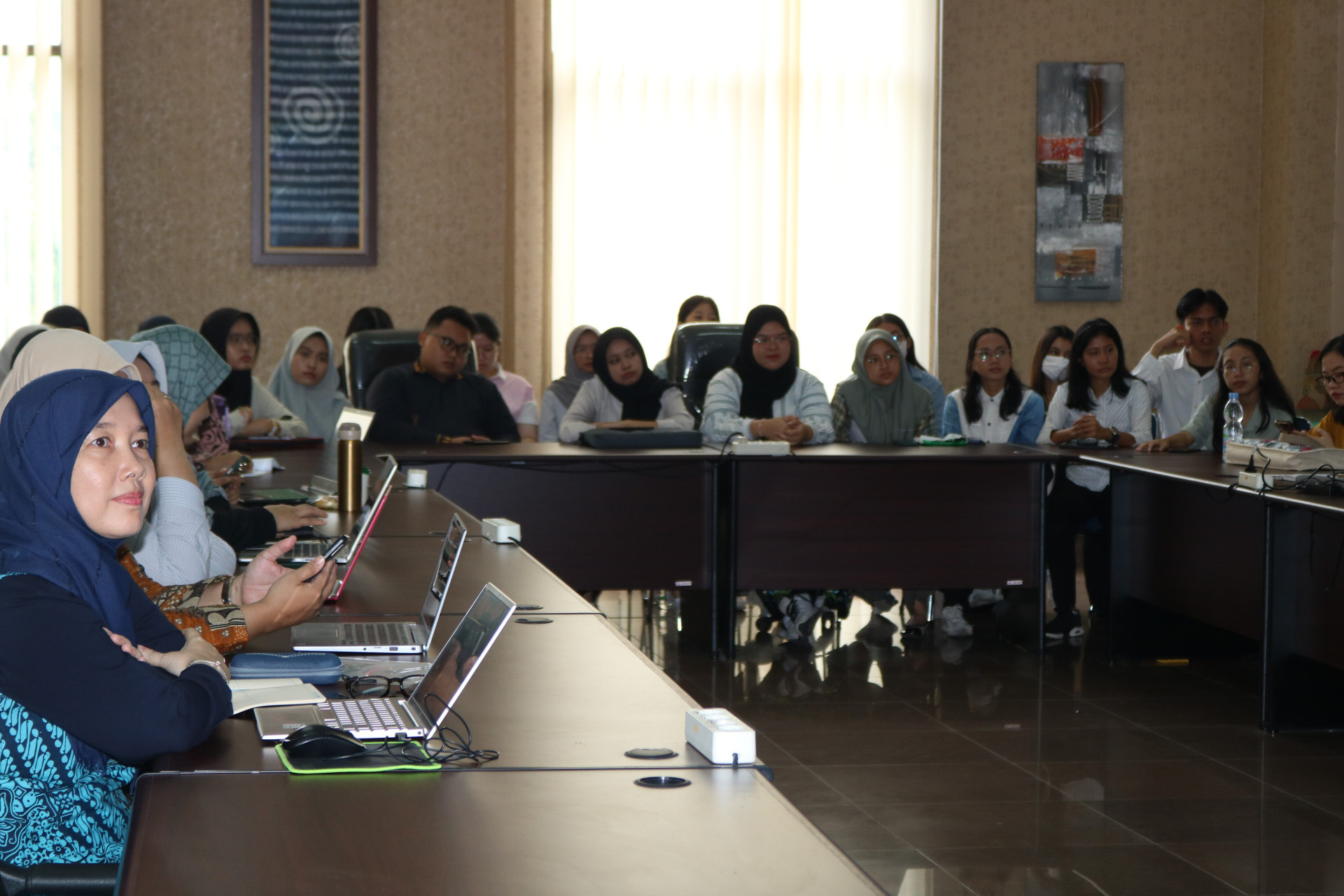
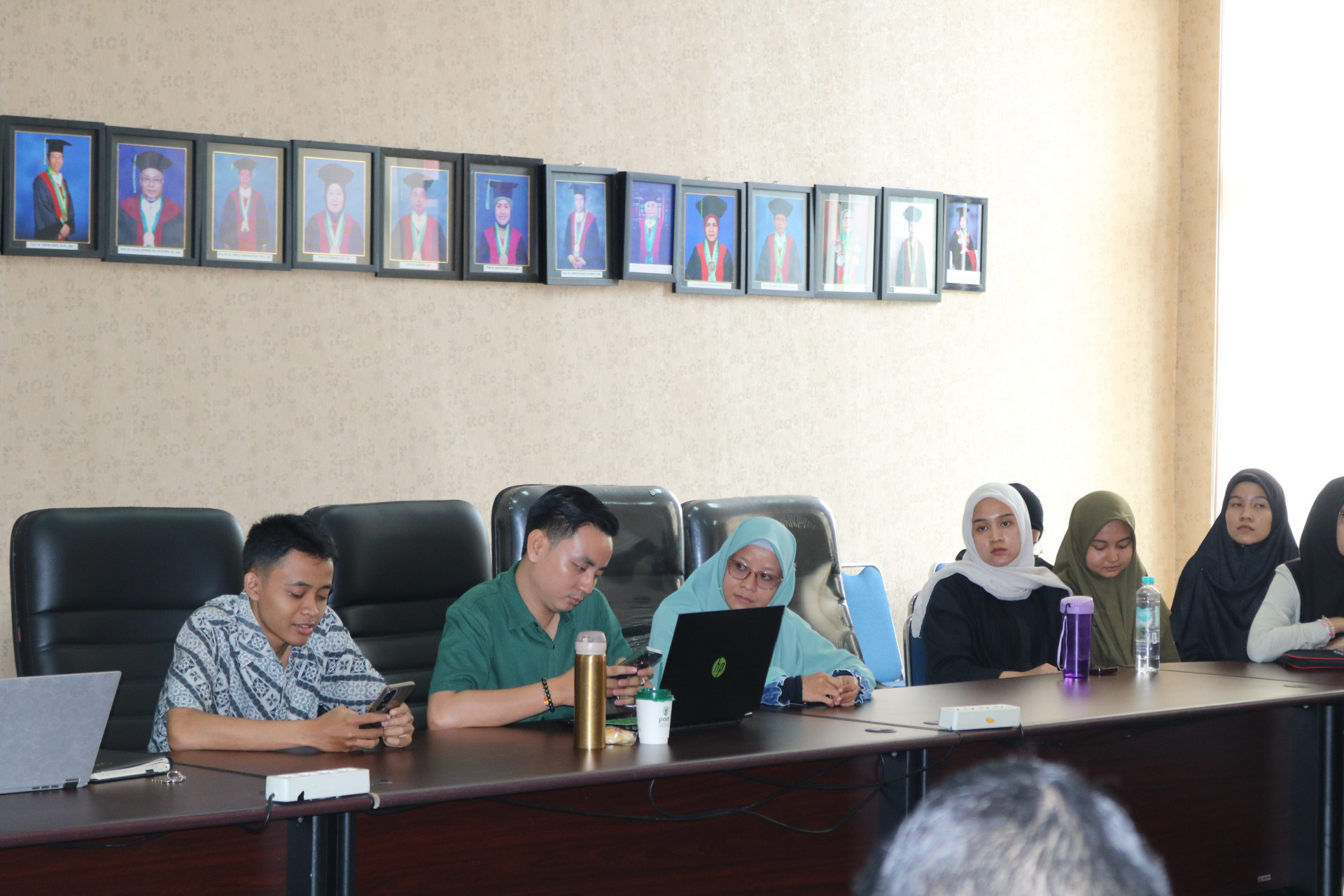
USU PHARMACY PUBLIC RELATIONS – The Faculty of Pharmacy, University of North Sumatra held a guest lecture with the theme "Computation and IT in Drug Discovery on Tuesday (27/8) at 10.00 – 12.00 WIB in the USU FF 2nd floor meeting room.

This guest lecture was guided by Dr. Henny Sri Wahyuni, S.Farm., M.Si., Apt. as moderator, as well as presenting a resource person who is a graduate of ITB Pharmacy and Pharmacist, M.Sc and Ph.D in Medicinal Chemistry (Keio University, Japan), namely Prof. Dr. apt. Daryono Hadi Tjahjono, M.Sc.Eng. Currently, Prof. Daryono is a Professor at the School of Pharmacy (SF), Bandung Institute of Technology (ITB).

Prof.'s research interests and themes. Daryono namely Synthesis & molecular modeling (porphyrin & chlorophyll derivatives as photosensitizers for photodynamic therapy & ligands for radiopharmaceuticals; Indonesia's natural molecules (and molecule data base) as lead compounds for anti-cancer, anti-virus, anti-microbial candidates). He has produced more than 60 publications in reputable international scientific journals (Scopus, h-index: 16); more than 45 presentations at international conferences (hosted at abroad); 2 books; 5 national patents; Editorial Board & Reviewer in a number of peer journals indexed by Scopus.

On this occasion, he gave a lecture to participants who were students at the USU Faculty of Pharmacy, both from the Bachelor of Pharmacy, Master of Pharmacy and Doctor of Pharmacy Study Programs with the title "The Role of Computing & Information Technology in Drug Discovery (The Role of Computation & IT in Drug Discovery)”. This lecture was also attended by the Dean and her staff, the Chair and secretary of the Study Program, as well as lecturers within USU's FF.

Millennials live in a digital ecosystem, digital culture is a main part of millennials' lives, all sources of information are open and easy to access, the habit of searching becomes a culture, teamwork becomes the main learning model. The exponential transformation towards digital is as follows:
Industry 1.0: Water/steam power
Industry 2.0: Electric power
Industry 3.0: Computing power
Industry 4.0: Internet of Things (IoT) power
IoT will revolutionize the industry, so new literacy is needed to face the era of Industrial Revolution 4.0 & Big Data. New literacy takes the form of technology, data and human literacy. Technological Literacy: Understand how machines work, technology applications (Coding, Artificial Intelligence, & Engineering Principles). Data Literacy: The ability to read, analyze, and use information (Big Data) in the digital world. Human literacy: humanities, communication, & design.
The forms of industrial revolution 4.0 that we are currently experiencing are online lectures and artificial intelligence (AI). Today, doctors can use artificial intelligence to assist them in their task of diagnosis, provide better guidance, speed up processes or support choices and decision making. AI will not replace doctors, but doctors who use AI will replace those who don't.
Likewise with pharmacists, if dispensing medicines and providing drug information is no longer done by pharmacists, what will be the role of pharmacists in the future? So pharmacists must be able to make an impact on health services and be properly educated to carry out this function. One of the advances in the pharmaceutical field that needs to be followed is Computer-assisted drug design (CADD): Computer-assisted drug design involves all the assistance of computer techniques used to discover, design, and optimize the biological activity of compounds that are thought to be used as drugs.

Life skills in the 21st century are critical thinking, creative, communicative and collaborative. Stay with learning and innovative abilities, digital literacy, as well as skills in life and career.