


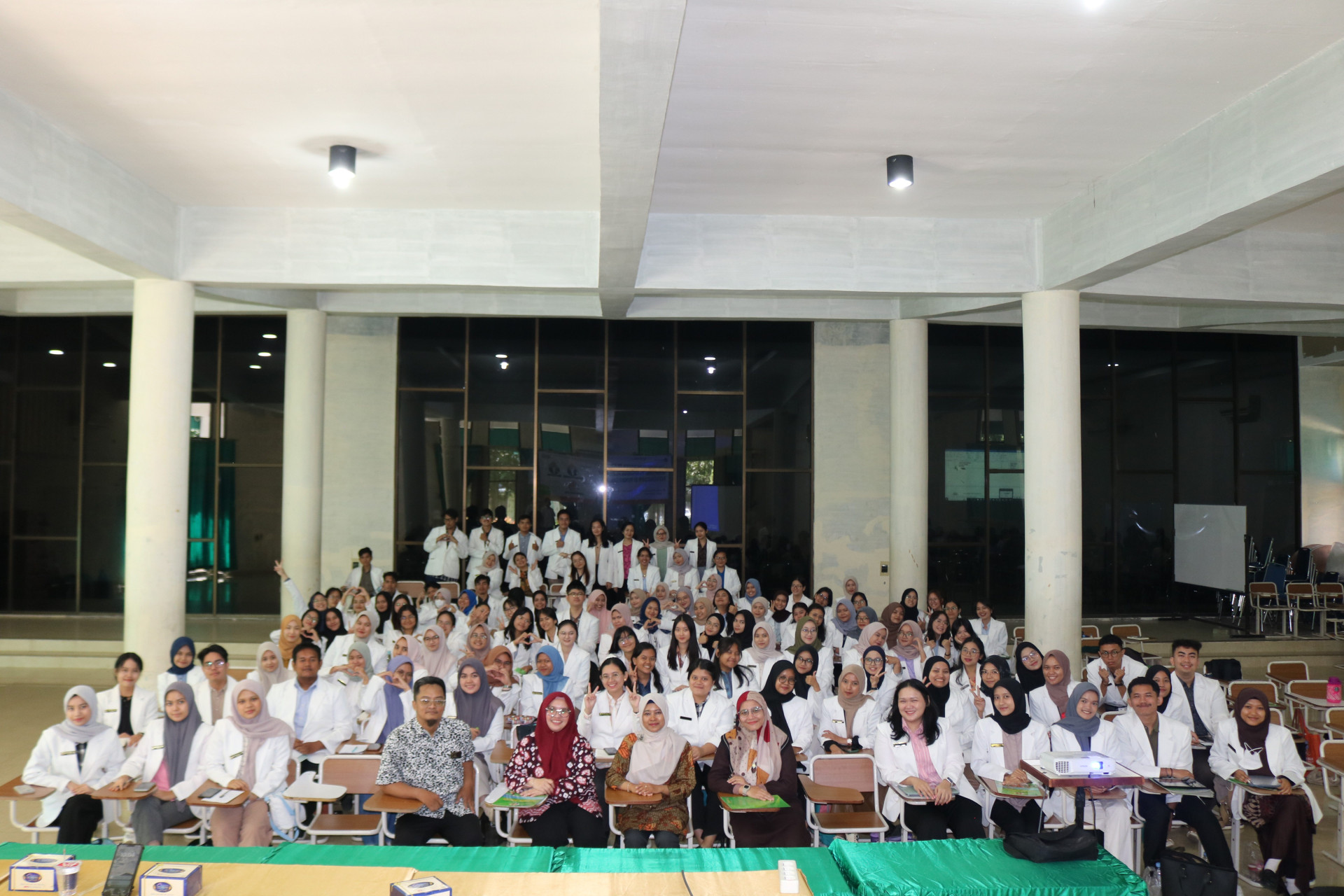
USU PHARMACY PUBLIC RELATIONS – The Pharmacist Professional Education Study Program of the Faculty of Pharmacy, Universitas Sumatera Utara held a Workshop on the Application of Pharmaceutical Work in Hospitals for pharmacist students, on Friday (30/8) at 08.00-12.00 WIB in the 1st Floor Hall of the USU Faculty of Pharmacy.
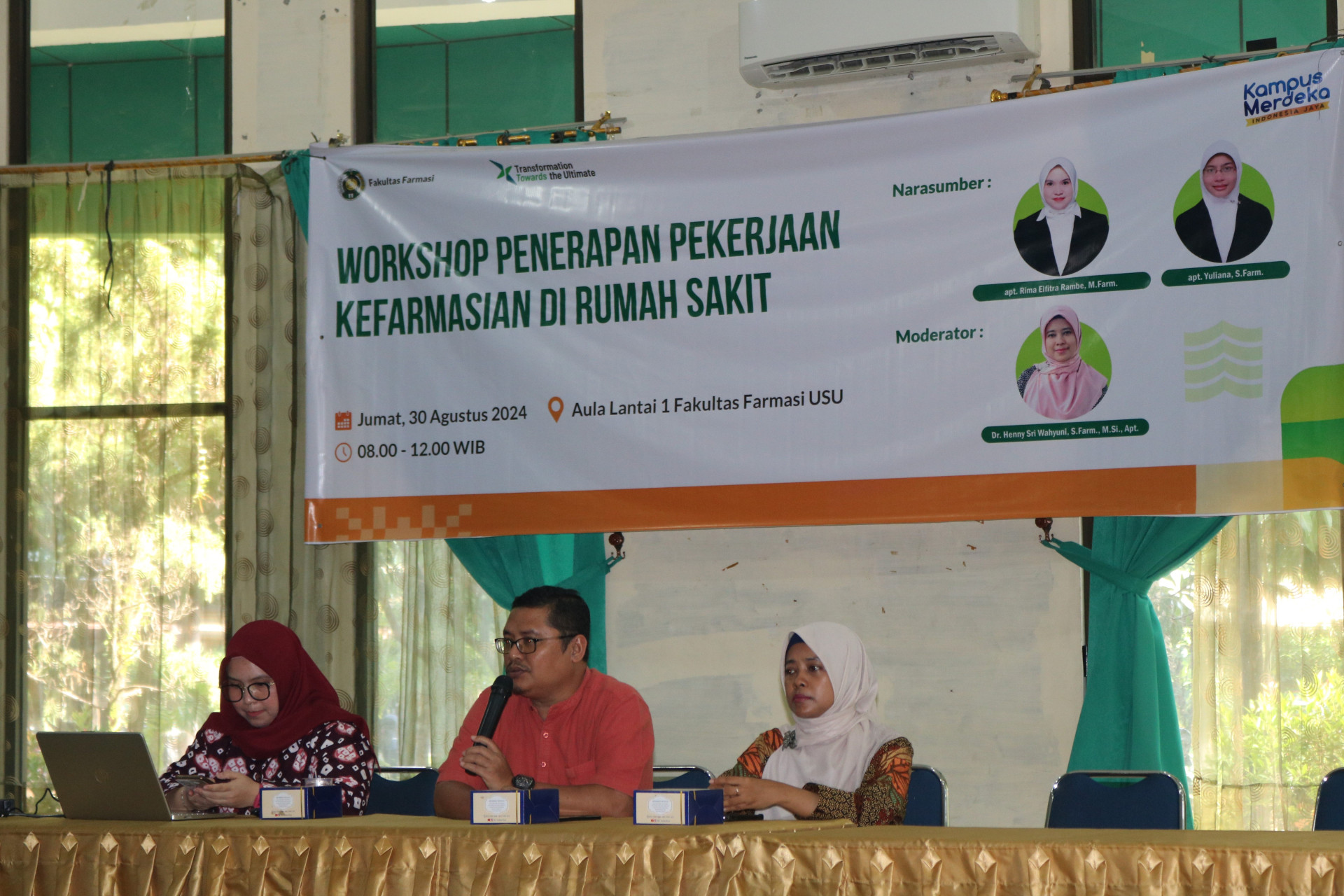
This workshop was opened by Vice Dean II, Hari Ronaldo Tanjung, S.Si., M.Sc., Apt, and hosted by Dr. Henny Sri Wahyuni, S.Farm., M.Si., Apt as moderator as well as Secretary of the USU Faculty of Pharmacy Pharmacist Professional Education Study Program. The speakers presented were pharmacists from the USU Teaching Hospital, apt. Rima Elfitra Rambe, M.Farm and apt. Yuliana, S.Farm.
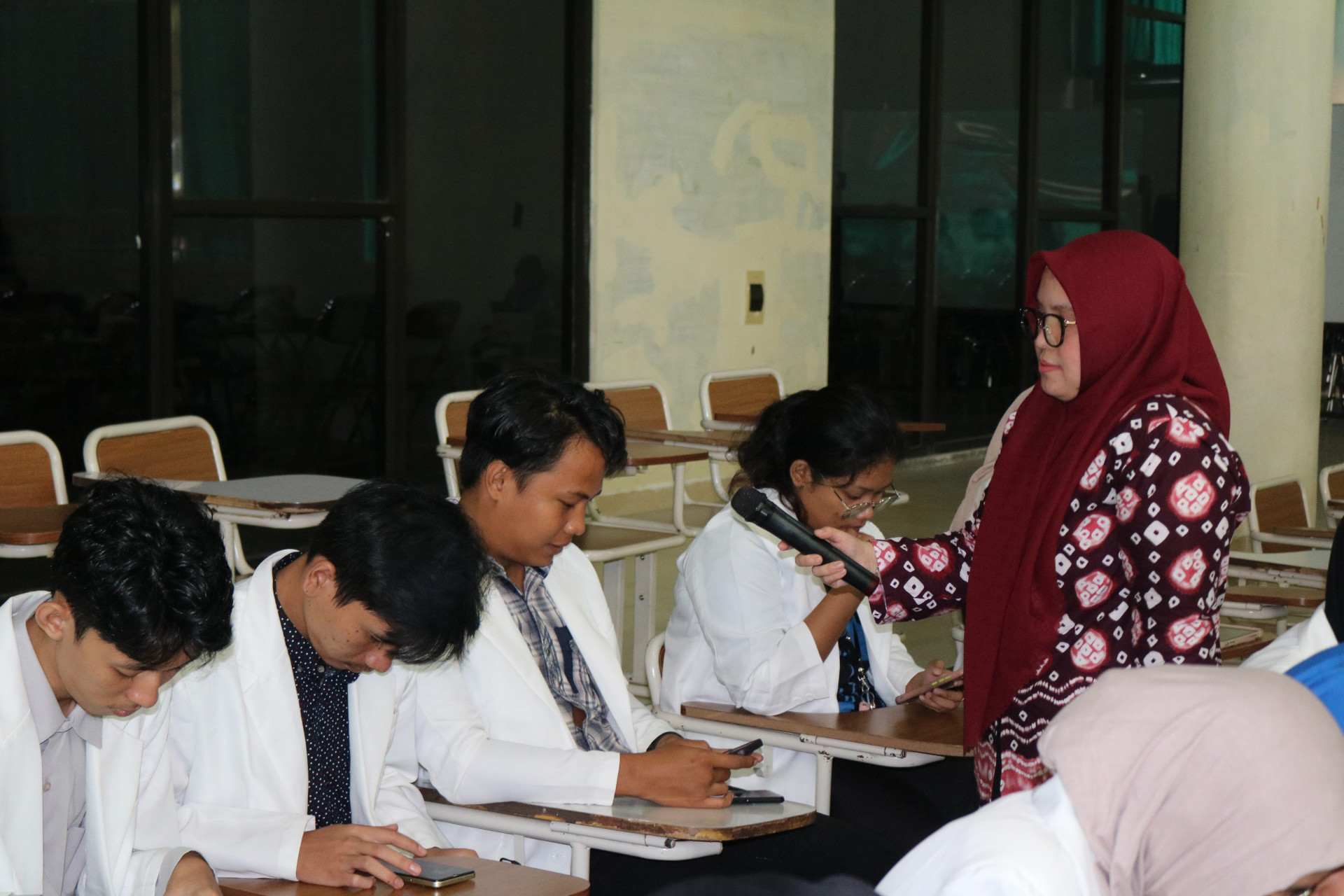
apt. Rima Elfitra Rambe, S.Farm. M.Farm provided material related to the preparation of pharmaceutical care. The explanation was very structured, starting from pharmaceutical service standards, related healthcare regulations, advanced stages of pharmaceutical services in the form of SOAP (subjective, objective, assessment, and plan), and its application in more depth.
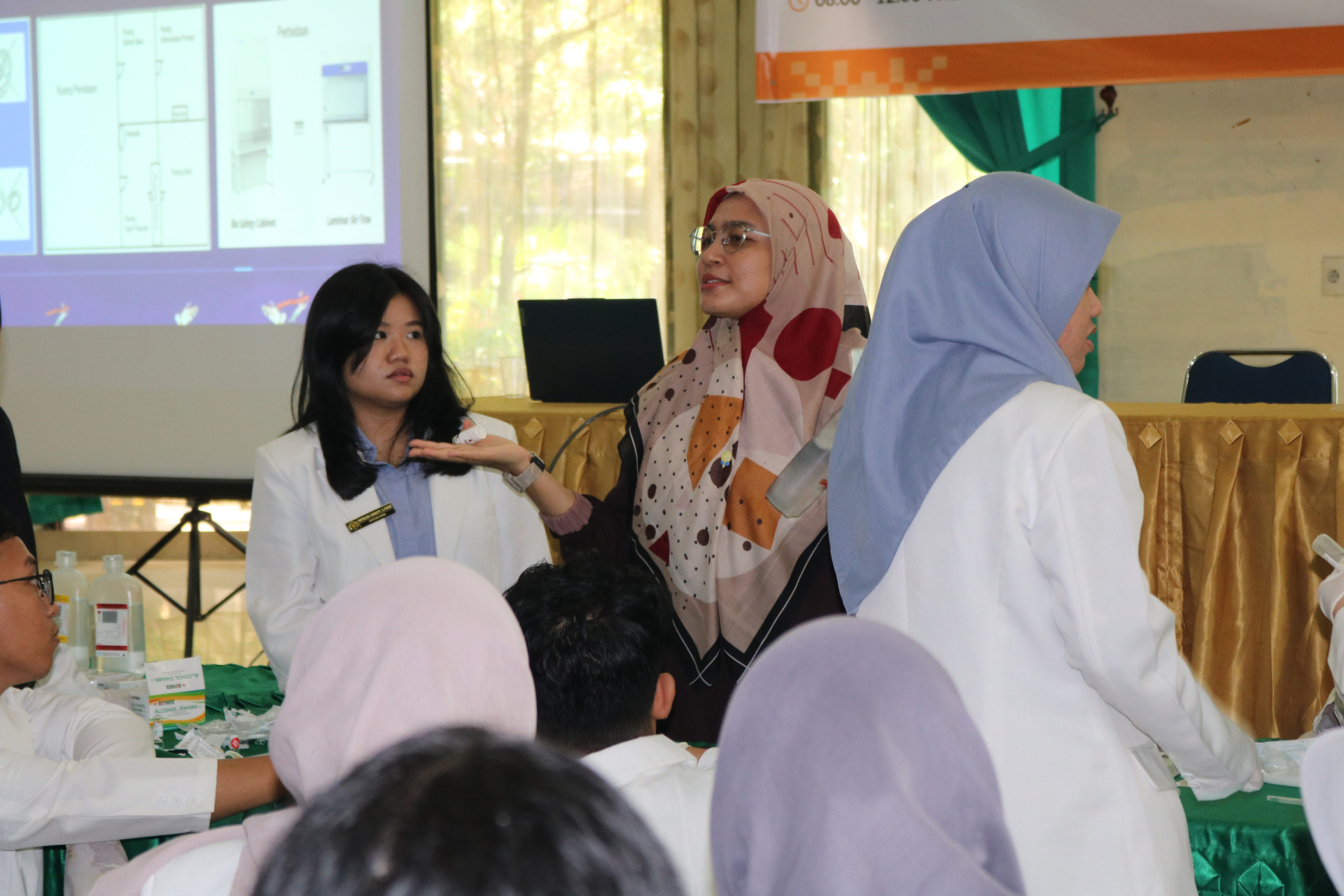
apt. Yuliana, S.Farm provided material related to handling cytostatics and aseptic techniques. As we know, pharmacists must understand aseptic technique, quality parameters, cytostatics drug handling, and labeling. Aseptic technique is very important to be considered to avoid or minimize microorganism contamination and the risk of exposure. It is necessary to know what problems will arise if it is not aseptic enough, how to prevent it, and where the chances of the problem arising are. In addition, the handling of cytostatics is also explained, not only to protect cytotoxic drugs from contaminants, but also to protect the personnel doing the handling.
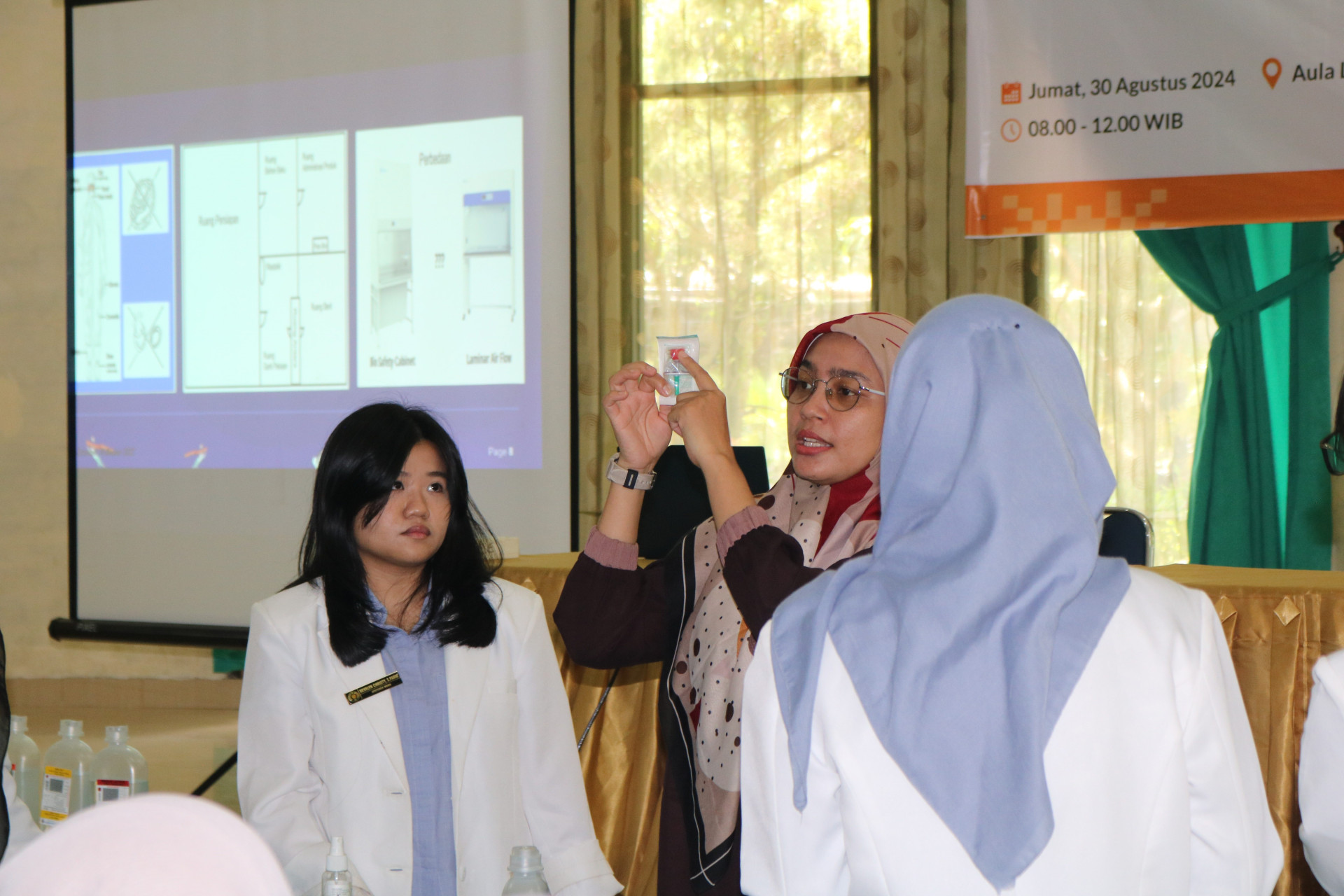
apt. Yuliana, S.Farm. also provided hands-on practice on how to mix drugs correctly, how to break ampoules, and how to take drugs from ampoules and vials using a syringe. This is so that prospective pharmacists get an overview of the correct actions. In addition, it was also practiced how to use the correct personal protective equipment (PPE) in the sterile room for chemotherapy drugs.