


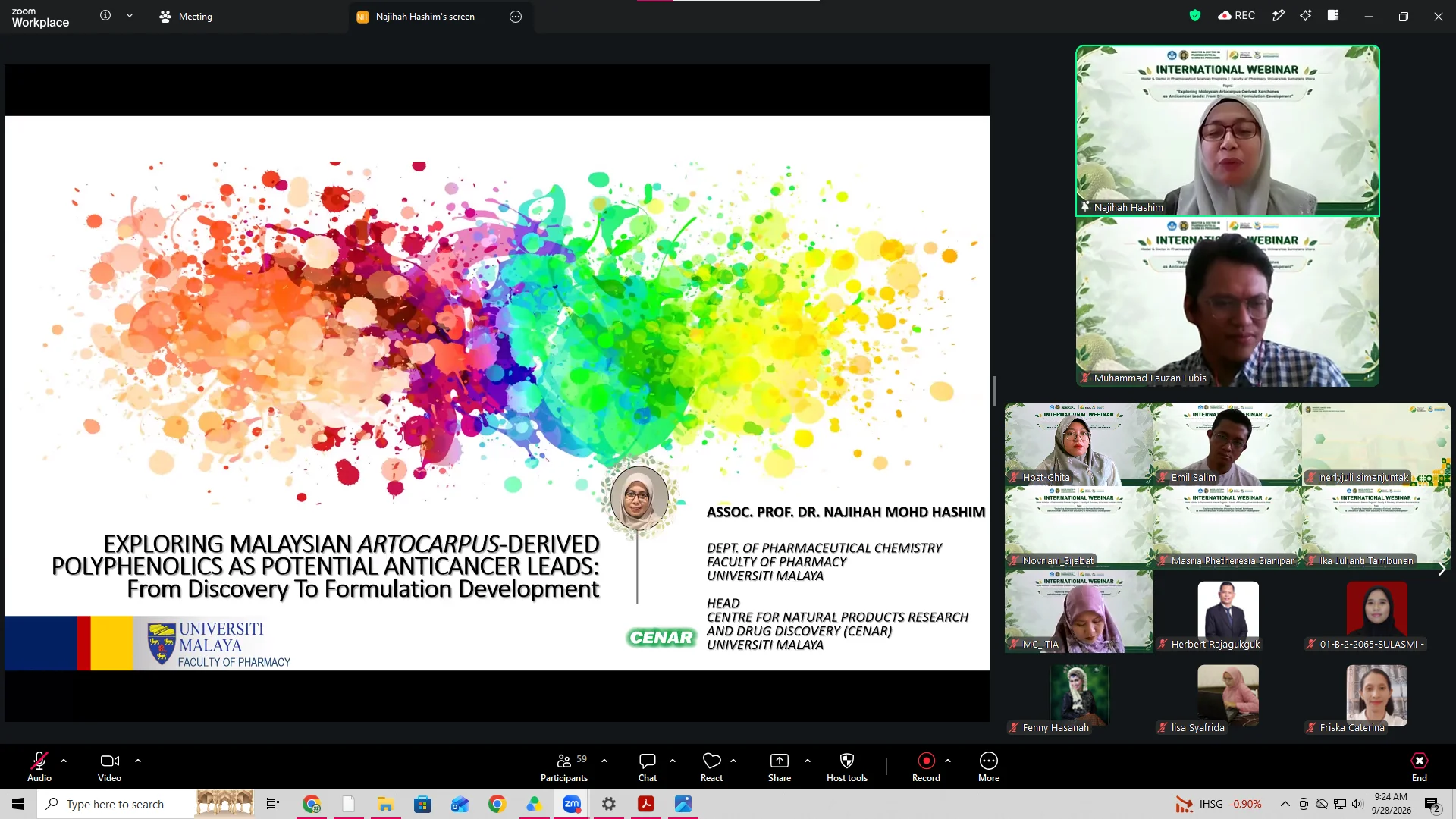
Medan, September 28, 2026 – The Faculty of Pharmacy, Universitas Sumatera Utara (USU) organized an international webinar entitled “Exploring Malaysian Artocarpus-Derived Polyphenolics as Potential Anticancer Leads: From Discovery to Formulation Development” on Monday (September 28, 2026). The activity served as a platform for sharing knowledge and research developments concerning the use of polyphenolic compounds derived from Artocarpus plants as potential candidates for anticancer therapy development.
The webinar featured Assoc. Prof. Dr. Najihah Mohd Hashim from the Department of Pharmaceutical Chemistry, Faculty of Pharmacy, Universiti Malaya, who also serves as Head of the Centre for Natural Products Research and Drug Discovery (CENAR), Universiti Malaya. In her presentation, the speaker discussed the progression of natural product research, from the discovery of bioactive compounds to formulation development.
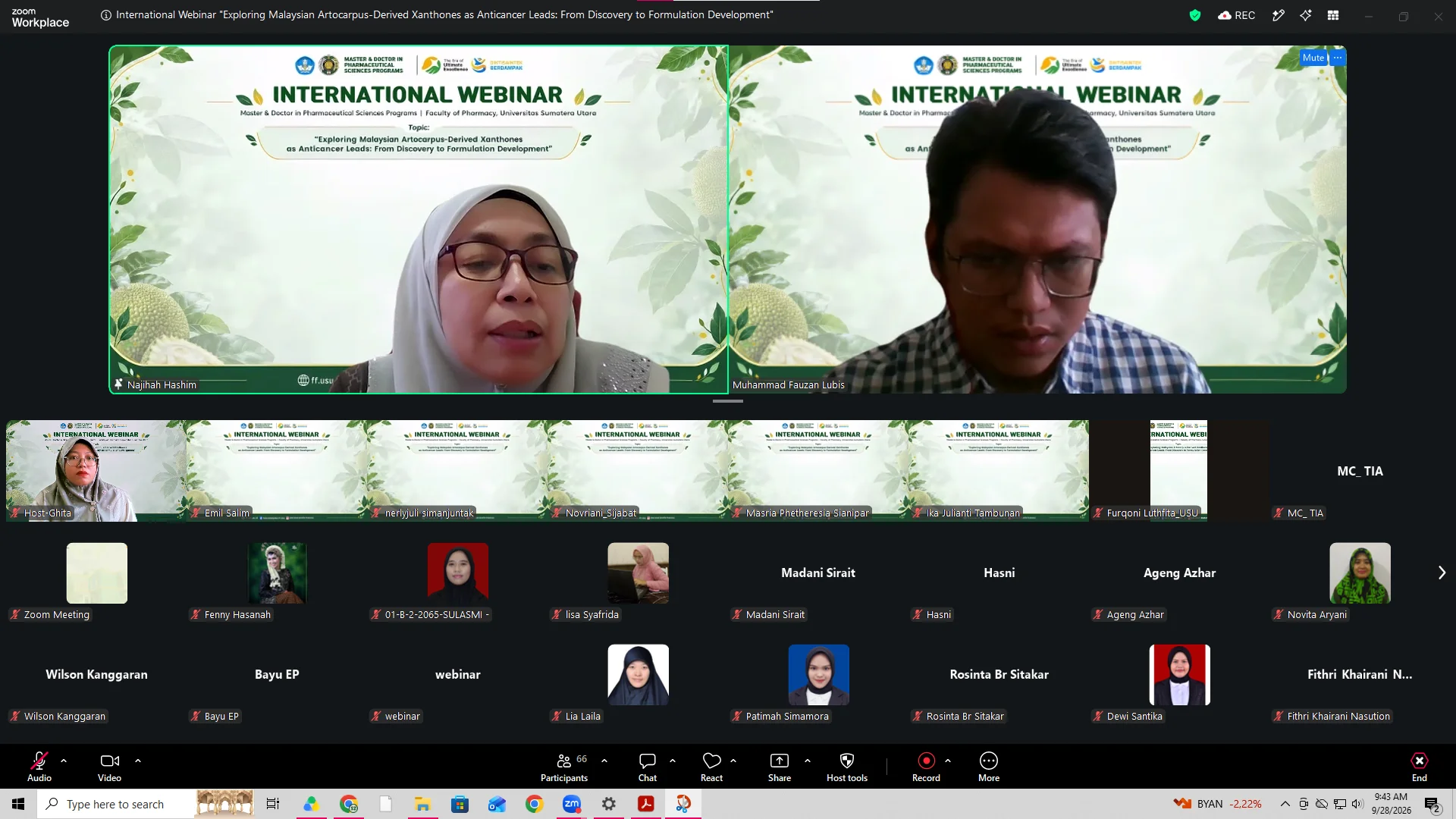
The activity was also attended by the Head of the Master's and Doctoral Programs in Pharmaceutical Sciences, Emil Salim, S.Farm., M.Sc., Ph.D., Apt., and more than 30 participants from the academic community and the Faculty of Pharmacy USU.
The webinar was moderated by Muhammad Fauzan Lubis, S.Farm., M.Farm., Apt., who guided the presentation and scientific discussion on developments in natural product research, drug candidate discovery, anticancer mechanisms, and the development of drug formulations and delivery systems.
In her presentation, Assoc. Prof. Dr. Najihah Mohd Hashim discussed the rich diversity of Artocarpus species originating from Southeast Asia. The Artocarpus genus is known to be rich in polyphenolic compounds and has traditionally been used for various health-related purposes. Research on medicinal plants plays an important role in identifying active compounds, understanding their mechanisms of action, and exploring their potential for pharmaceutical product development.
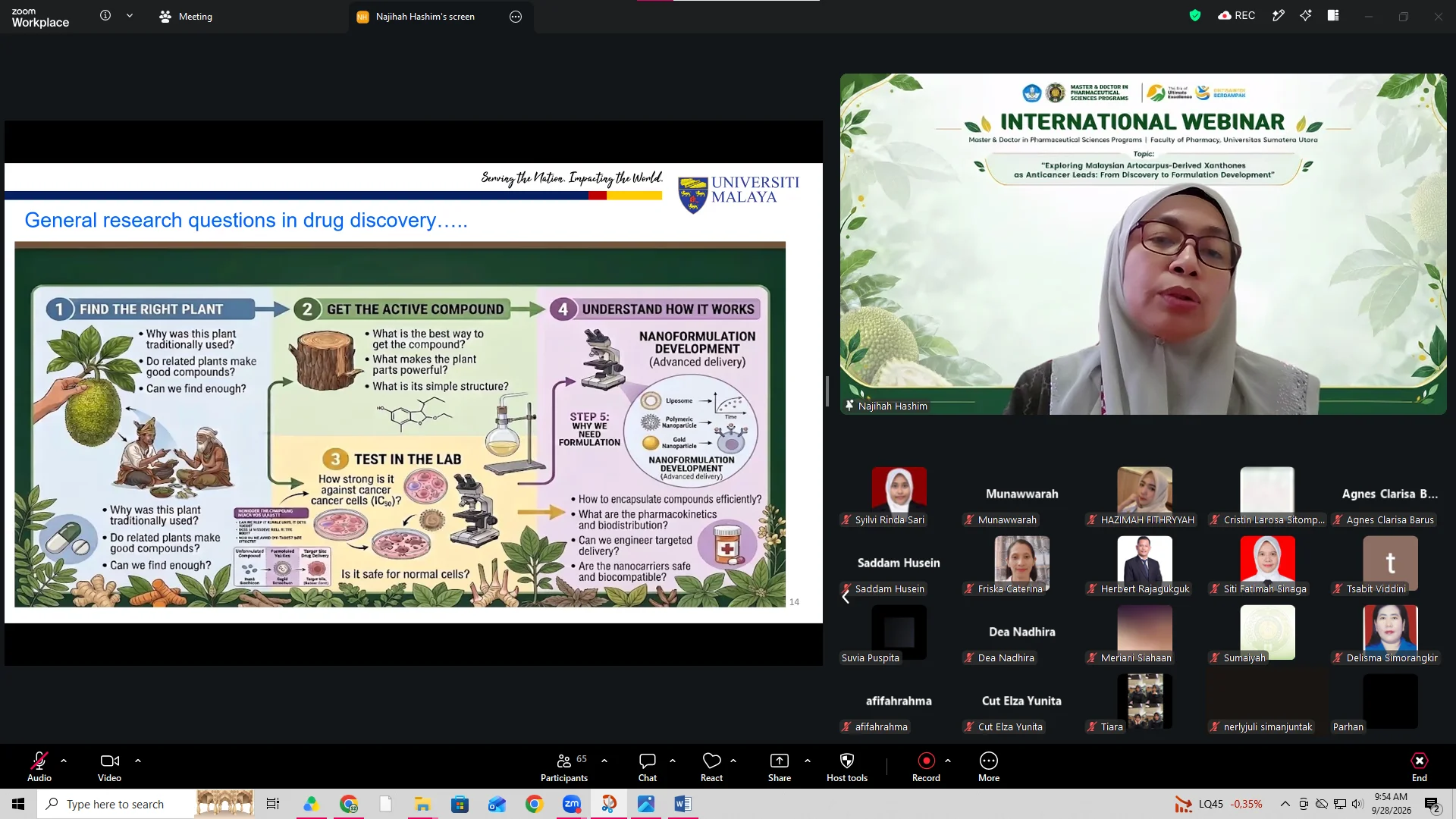
The presentation also covered various stages of drug discovery, ranging from compound separation and isolation using chromatographic techniques and structural analysis to in vitro activity testing and in vivo studies. These investigations included testing against various cancer cell lines and analyzing cell death mechanisms through the apoptosis pathway.
Two compounds highlighted in the research were Pyranocycloartobiloxanthone A (PA) and Artonin E (AE). The presentation showed that both compounds exhibited antiproliferative activity against several cancer cell lines. Artonin E was also investigated through in vitro and in vivo studies, including research involving breast and ovarian cancer cells.
Beyond compound discovery, the webinar also addressed the development of drug formulations and delivery systems. One approach presented was the use of liposomes containing Artonin E, including folic acid modification to support more targeted delivery to breast cancer cells. This approach illustrated the progression of natural product research from bioactive compound candidates toward drug delivery systems.
The research presented indicated that the Artonin E liposome formulation had nanoscale characteristics, a relatively narrow size distribution, and high encapsulation efficiency. In vitro testing on MCF-7 breast cancer cells also demonstrated cytotoxic activity of the Artonin E liposome formulation under the conditions tested.
This international webinar formed part of the Faculty of Pharmacy USU's efforts to broaden academic perspectives and strengthen the research culture in pharmaceutical sciences. The exchange of knowledge with an academic from Universiti Malaya also provided participants with an opportunity to gain insights into natural product research, drug discovery, and drug formulation and delivery.
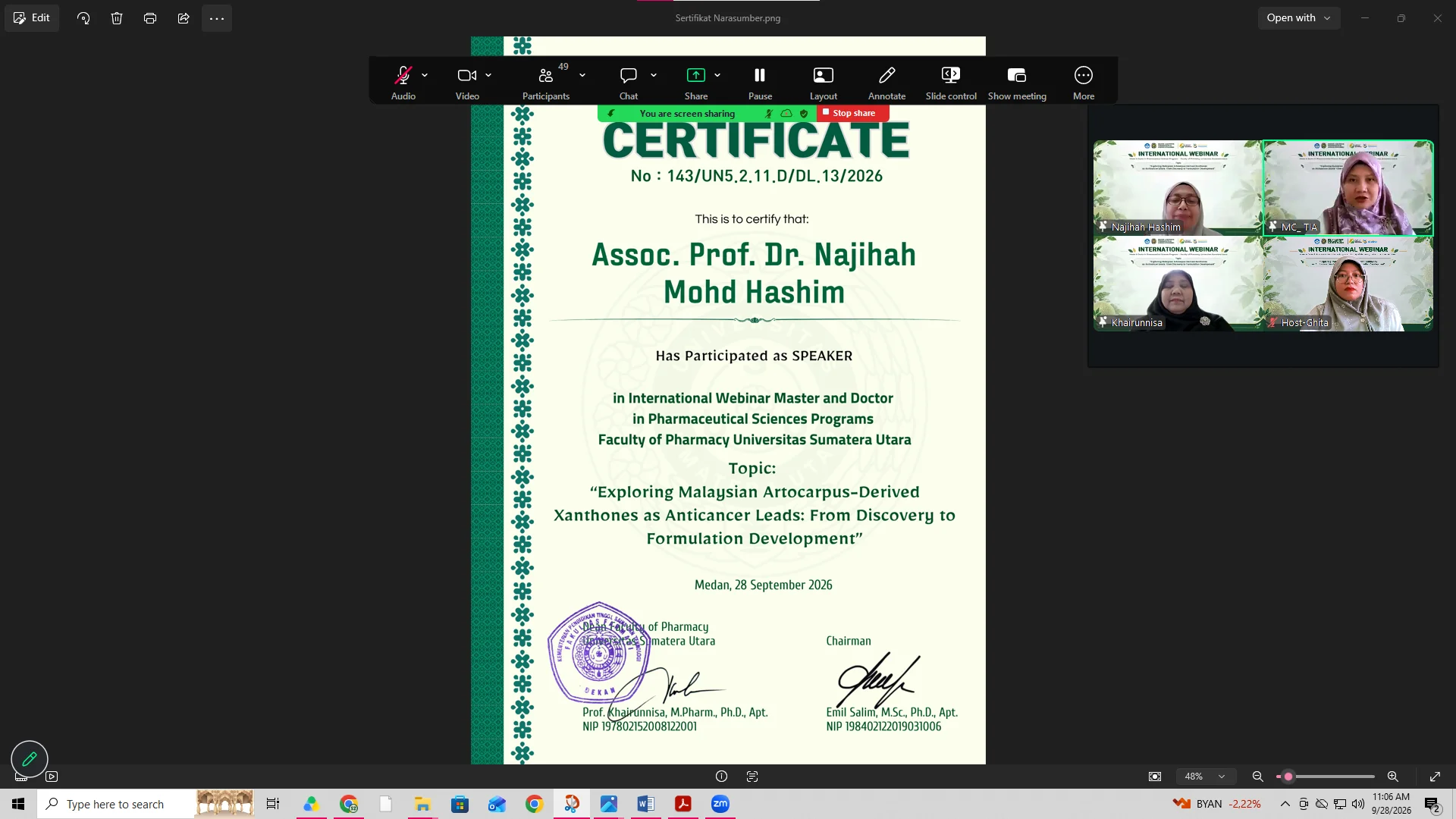
Through this activity, the Faculty of Pharmacy USU continues to promote the strengthening of education and research oriented toward innovation and the advancement of scientific knowledge in the health sector. The activity also aligns with the Sustainable Development Goals (SDGs), particularly SDG 3: Good Health and Well-Being, through research and innovation that support health improvement efforts and the search for new therapeutic candidates.