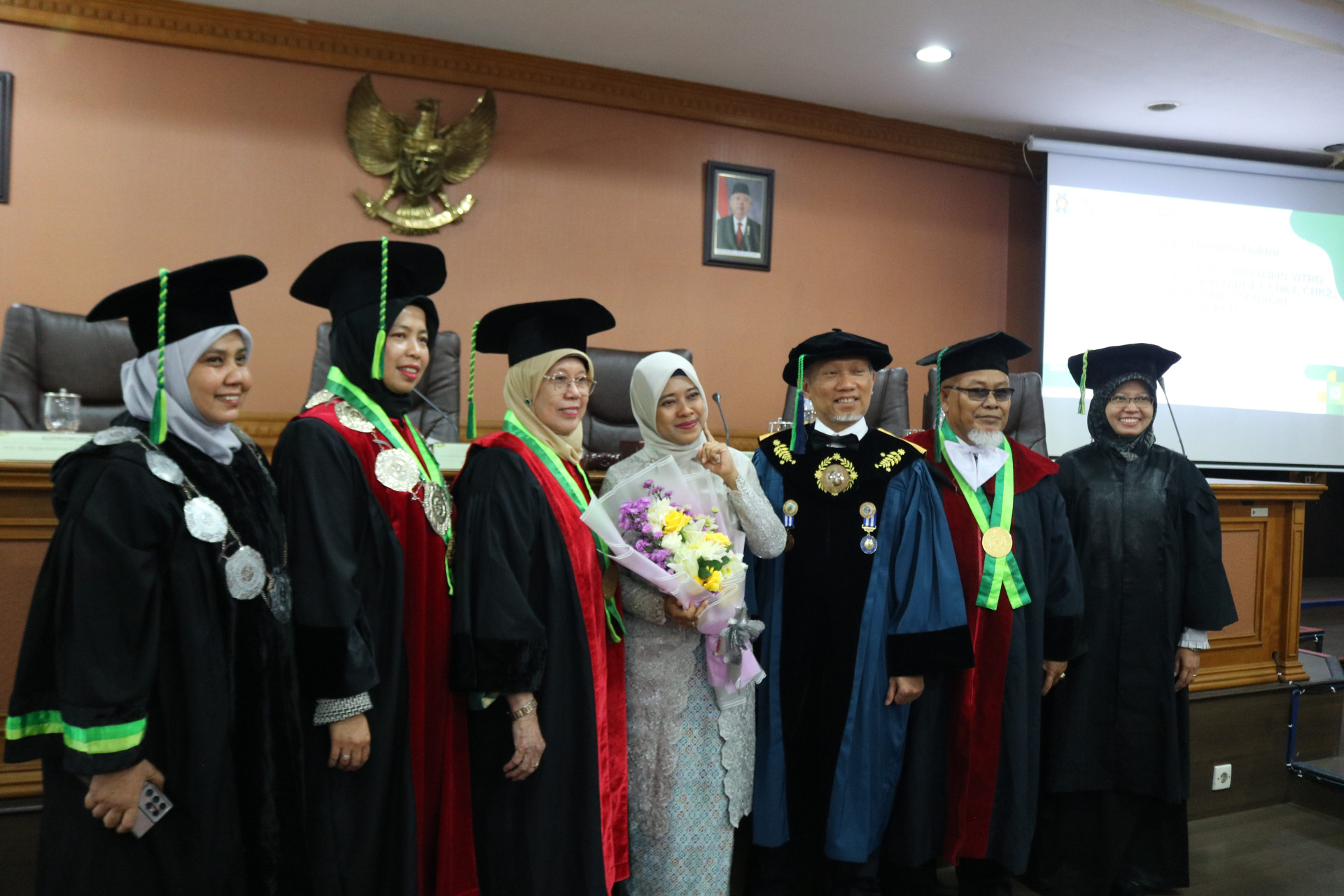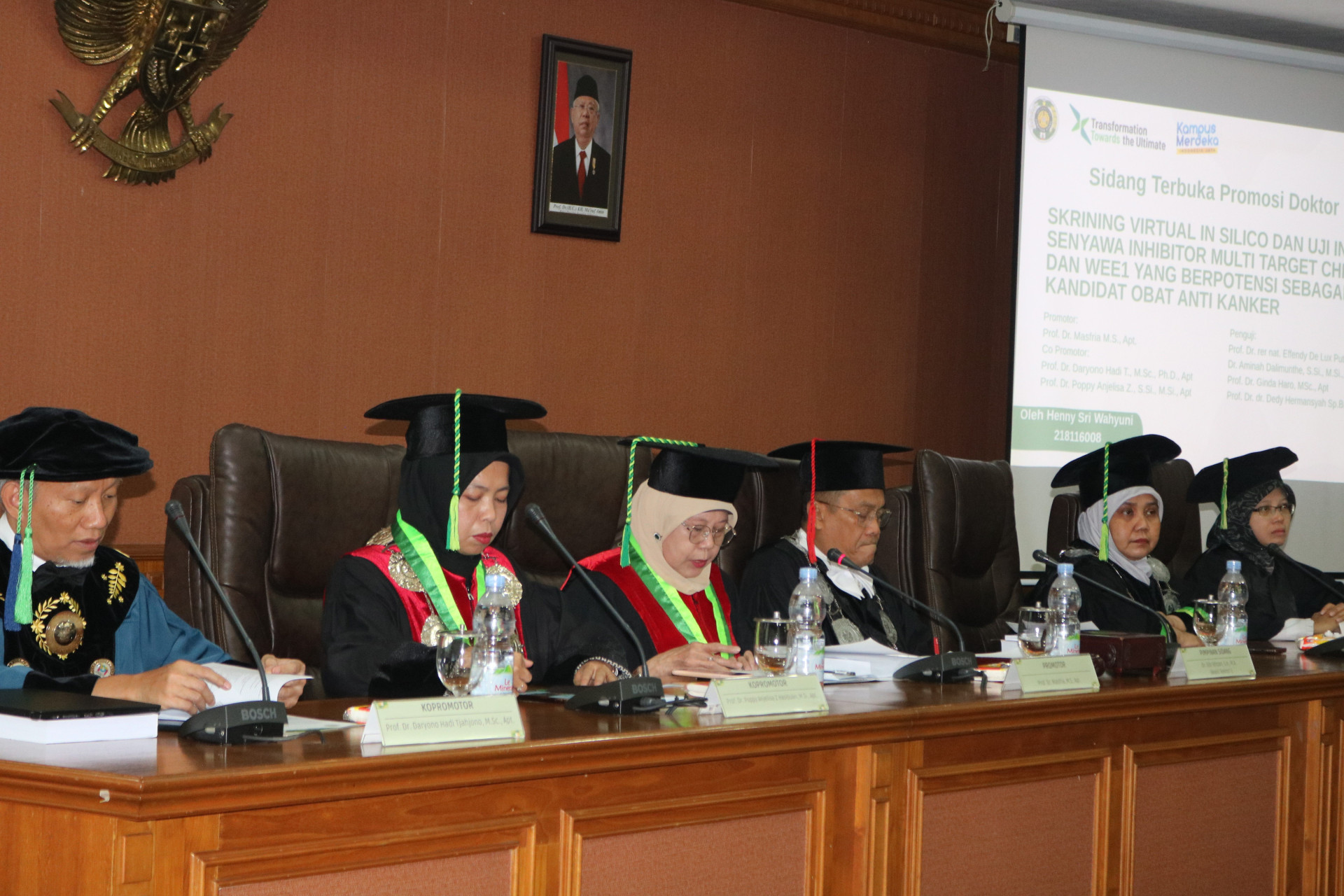
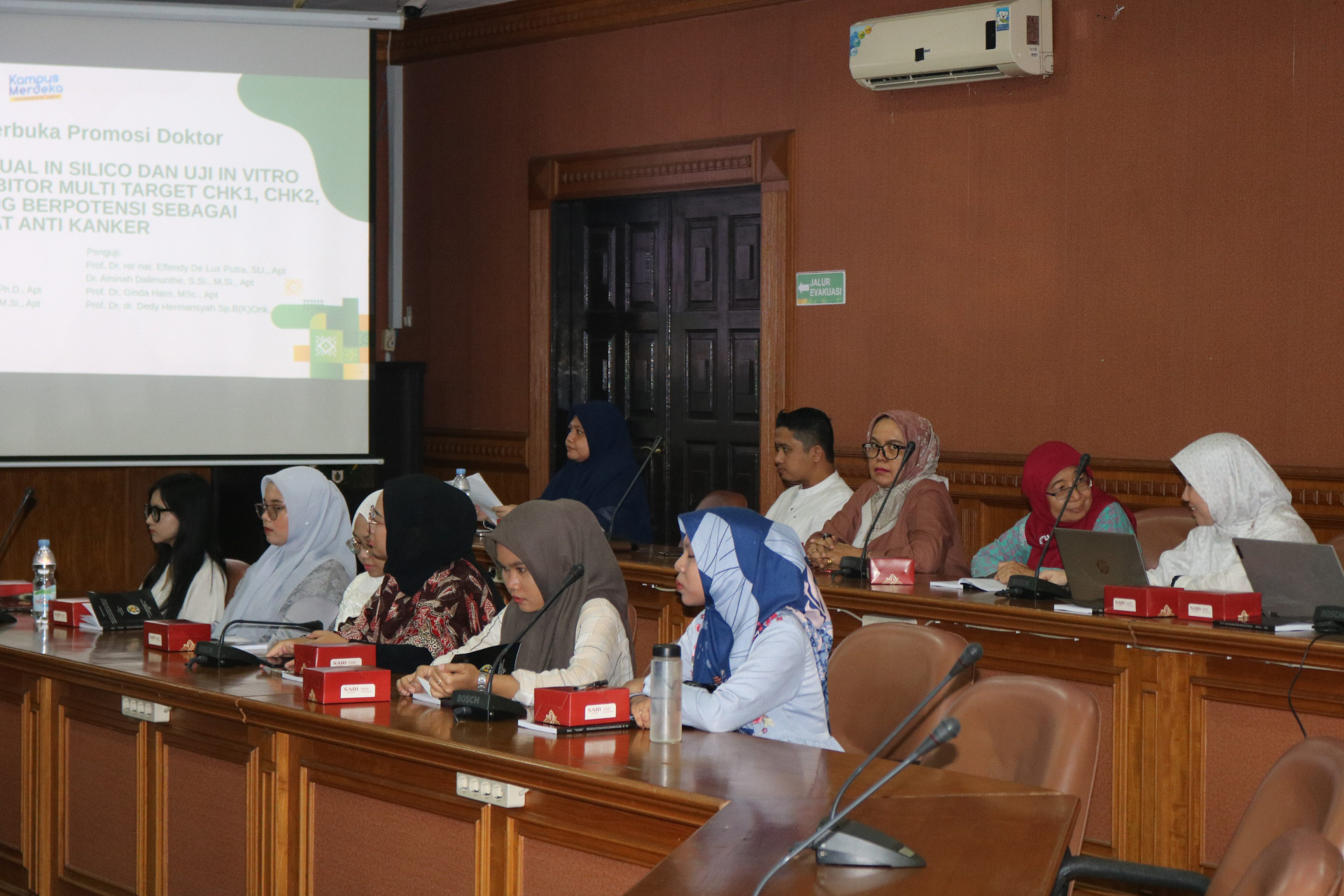
USU PHARMACY PUBLIC RELATIONS – The Faculty of Pharmacy, Universitas Sumatera Utara, held the Doctoral Promotion Exam (Open Session) for the Doctoral Program in Pharmaceutical Sciences on Monday, August 26, 2024, from 10:00 AM until completion, in the IMT-GT Room, 2nd Floor, BPA Building, USU.

The promovenda for this open session was Henny Sri Wahyuni, presenting her dissertation titled, “In Silico Virtual Screening and In Vitro Testing of Multi-Target CHK1, CHK2, and WEE1 Inhibitors as Potential Anticancer Drug Candidates”; and her scientific article, “The Potential of (2S,3S,4S,5R,6S)-6-[2-(3,4-dihydroxyphenyl)-3,5,7-trihydroxy-4-oxochromen-8-yl]oxy-3,4,5-trihydroxyoxane-2-carboxylic acid as an Anticancer Agent: In Silico and In Vitro Assay.”
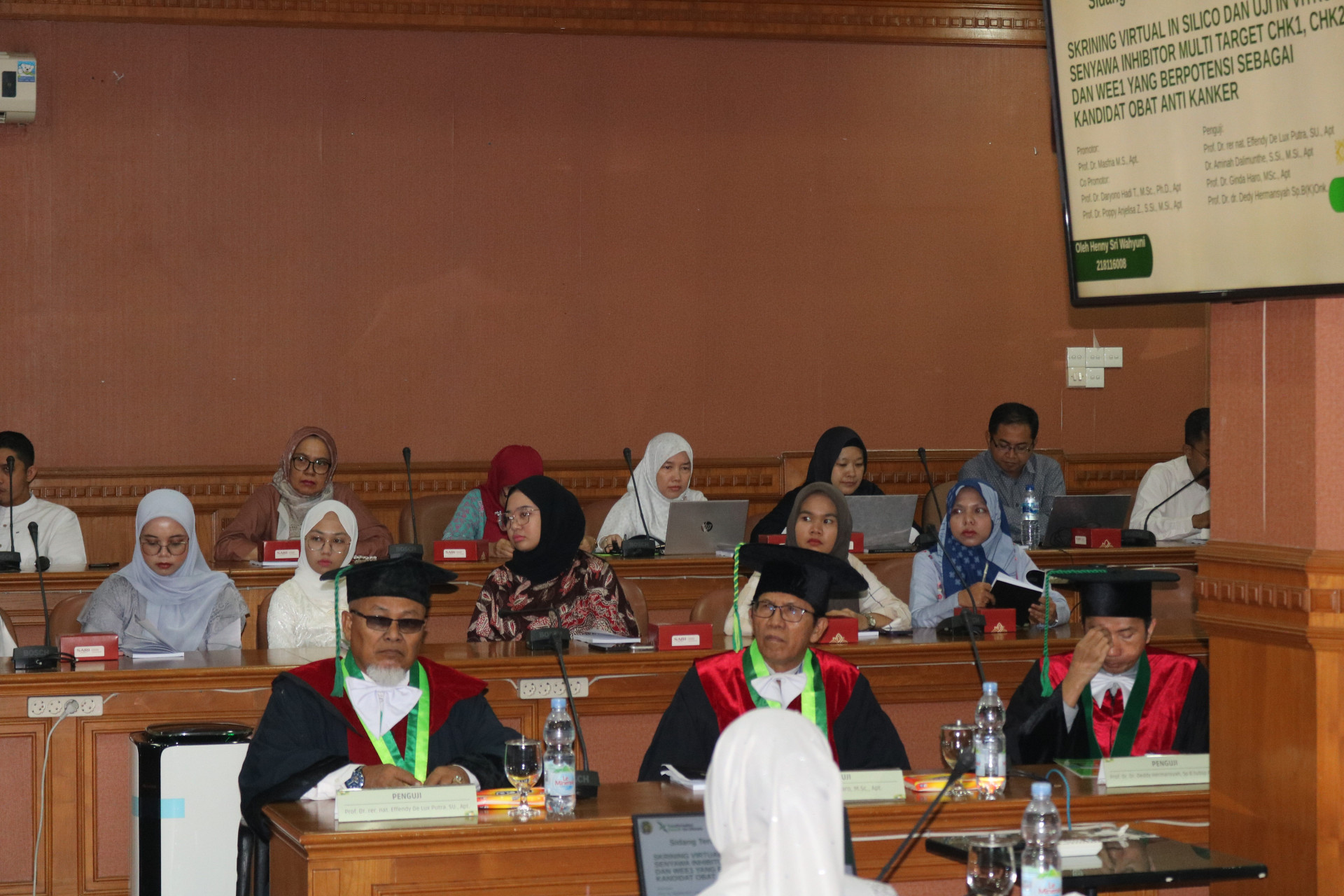
The session was chaired by the Rector of Universitas Sumatera Utara, Prof. Dr. Muryanto Amin, S.Sos., M.Si., with the advisory committee comprising: Prof. Dr. Masfria, M.S., Apt as the Promoter; Prof. Dr. Daryono Hadi Tjahjono, M.Sc., Apt as the Co-Promoter; and Prof. Dr. Poppy Anjelisa Z. Hasibuan, M.Si., Apt as the Co-Promoter. The external examiners included Dr. Aminah Dalimunthe, S.Si., M.Si., Apt.; Prof. Dr. rer. nat. Effendy De Lux Putra, S.U., Apt.; Prof. Dr. Ginda Haro, M.Sc., Apt.; and Prof. Dr. Dr. Deddy Hermansyah, Sp.B.Subsp.Onk(K).
Abstract of the Promovenda’s Dissertation:
Breast cancer and ovarian cancer are among the cancers with the highest prevalence and mortality rates in women worldwide. This is largely due to delayed diagnosis and resistance to molecular treatments. CHK1, CHK2, and WEE1 are molecular pathways involved in many cancer cases. Activation of these pathways is triggered by single-strand or double-strand DNA damage, leading to cell cycle arrest. Inhibiting CHK1, CHK2, and WEE1 as checkpoints can induce apoptosis because cells with damaged DNA will enter mitosis without repair, triggering apoptosis. Currently, there are few inhibitors that can target multiple pathways. Prexasertib is a selective inhibitor of CHK1 and CHK2, and adavosertib is a selective inhibitor of WEE1. Both inhibitors have undergone clinical trials but have side effects such as neutropenia, thrombocytopenia, anemia, and hepatotoxicity. The aim of this research is to discover hit compounds with potential as multi-target inhibitors of CHK1, CHK2, and WEE1 that are both effective and safe. Potential compounds were identified through pharmacophore modeling, followed by molecular docking and molecular dynamics. The results of the in silico tests were analyzed and further subjected to in vitro tests to assess cytotoxic activity, proliferation, cell cycle, apoptosis, and protein expression in 4T1 and MCF-7 cells. The study identified six potential compounds from the molecular docking and dynamics simulation results. Among these, compounds MCULE-6508263597-0; MCULE-1328845163-0; MCULE-3015027877-0; and MCULE-6752415685-0 were advanced to in vitro testing in 4T1 and MCF-7 cells. Compounds MCULE-3015027877-0 and MCULE-6752415685-0 exhibited better IC50 values compared to the control, with reduced cell viability after 72 hours. Both compounds showed activity in the S and G2M phases in both cell lines, and in apoptosis tests, they were found to enhance early and late apoptosis in both cells. In protein expression tests in 4T1 cells, both compounds had lower parent cell percentages compared to the control and comparator, indicating inhibition of CHK1, CHK2, and WEE1. The results of the study concluded that the two compounds, derived from pharmacophore modeling, molecular docking, molecular dynamics, and in vitro testing, demonstrated activity as multi-target inhibitors of CHK1, CHK2, and WEE1.